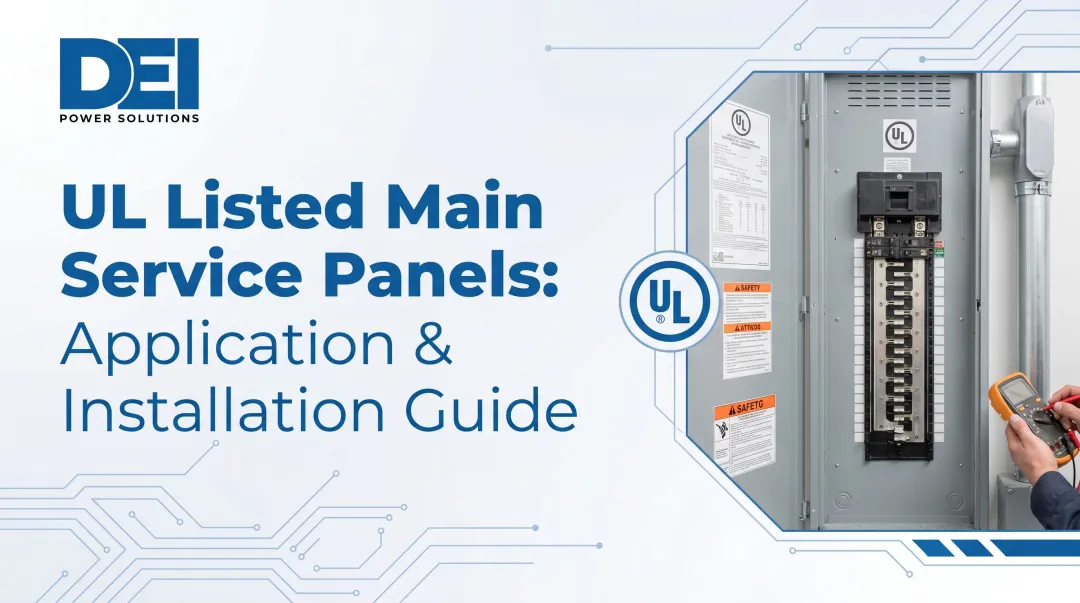
The C UL US mark (also written as cULus) is a dual-market safety certification issued by UL LLC, confirming a product has been evaluated against safety requirements for both the United States and Canada. Each element of that mark carries specific meaning, and understanding the distinctions — between C UL US Listed, UL Listed, and UL Recognized — directly affects procurement decisions and code compliance.
This article breaks down what each part of the mark means, how the certifications differ, why it matters for electrical equipment, and how to verify a listing before you buy.
Key Takeaways
- The C UL US (cULus) mark certifies a product for both U.S. and Canadian markets in a single evaluation
- The "c" means Canadian standards compliance; the "us" means U.S. standards compliance
- UL Listed = complete product; UL Recognized = component only — not interchangeable
- Non-listed equipment typically requires AHJ-directed field evaluation under NFPA 790
- Verify any listing through UL Product iQ before specifying or installing
What Is the C UL US Listed Mark?
The C UL US mark is issued by UL LLC — a testing and certification organization with roots going back to 1894 — after a product has been evaluated against safety standards applicable in both the United States and Canada.
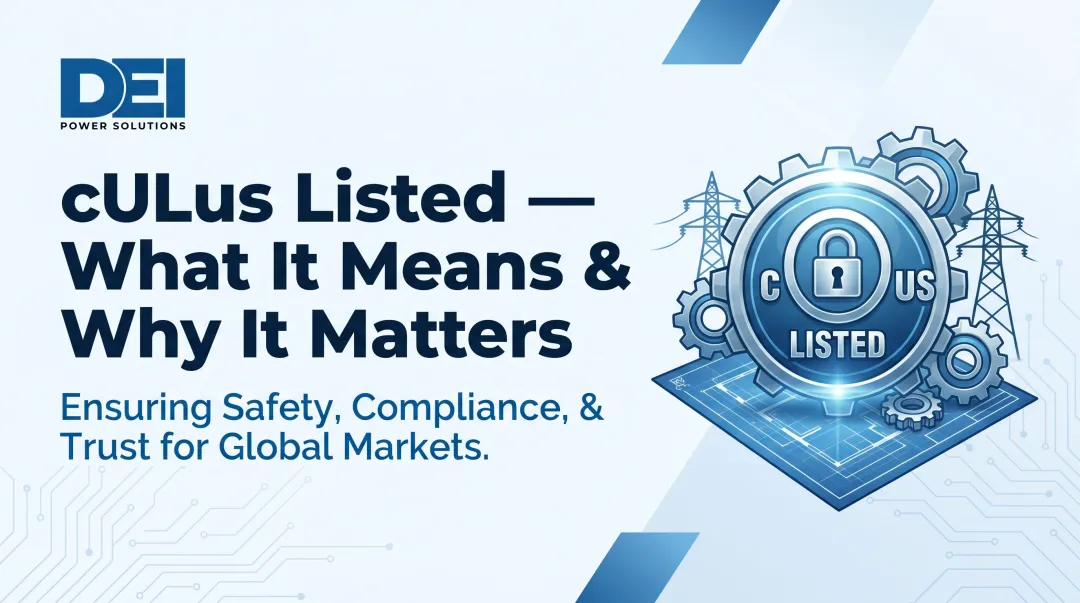
The terminology is consistent across documents: "C UL US listed" and "cULus listed" refer to the same mark. "C UL US" is how it appears on a physical product label, with a small "c" to the left of the UL circle and "us" to the right. "cULus" is the shorthand used in spec sheets and documentation.
What "Listed" Actually Means
In UL's terminology, "listed" has a precise definition. It applies to a complete, stand-alone product — not a component — that has been:
- Tested against UL's published standards for a specific product category
- Found to meet those safety requirements for its intended use
- Evaluated including factory-installed components as part of the whole assembly
UL deliberately does not use the word "approved." The correct terms are Listed, Recognized, Classified, or Certified — each with distinct meanings covered below.
The U.S. and Canada Framework
OSHA recognizes UL LLC as a Nationally Recognized Testing Laboratory (NRTL), which means UL-listed products satisfy third-party testing requirements referenced in the National Electrical Code (NEC) and enforceable by local Authorities Having Jurisdiction (AHJ).
On the Canadian side, UL LLC holds accreditation under Canada's Standards Council (SCC), allowing its mark to be accepted by Canadian code officials and regulatory bodies. The combined C UL US mark reflects both recognitions — that single evaluation covers both markets.
What Each Part of the C UL US Mark Means
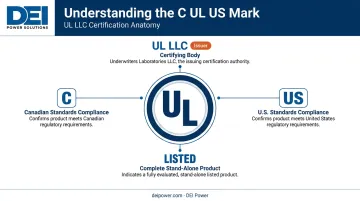
The mark appears as C – UL – US – LISTED, with C to the left of the UL circle and US to the right. Each element carries a distinct meaning:
| Mark Element | What It Means |
|---|---|
| C (left of circle) | Product evaluated against Canadian standards and codes; accepted by Canadian code officials and regulatory bodies |
| UL (center circle) | UL LLC is the certifying body, responsible for testing and maintaining the listing through ongoing factory inspections |
| US (right of circle) | Product meets U.S. safety standards; suitable for installation under applicable U.S. codes and regulations |
| LISTED | Applies to the complete, stand-alone product — not a component — within a specific product category |
What the Mark Does NOT Indicate
The C UL US mark is not a blanket approval for every use case. Key limitations to understand:
- The listing applies to a specific product category and intended use — verify the Category Control Number (CCN) matches your application
- It does not guarantee the product is appropriate for every installation environment (hazardous locations, for example, require additional certifications)
- A listing on the manufacturer's name does not automatically extend to every model they produce; each specific product must be verified individually
C UL US Listed vs. UL Listed vs. UL Recognized: Key Differences
Procurement teams confuse these three marks more often than any other certification question. They look similar and sound related — but they are not interchangeable.
UL Listed (U.S. Only)
The standard UL Listed mark — a circle with "UL," no "c" or "us" adders — certifies a complete product against U.S. UL standards only. It does not carry Canadian standards evaluation. Equipment sold only in the U.S. market may carry this mark without the dual-country designation.
C UL US Listed (Dual Market)
The cULus mark adds Canadian standards evaluation, making the product acceptable in both markets. For most commercial and industrial electrical equipment sold across North America, this is the mark to look for.
It eliminates the need for separate Canadian certification — one mark covers both jurisdictions.
UL Recognized (Component Level)
The UL Recognized mark applies to components intended to be incorporated into a larger system — not stand-alone equipment. Per UL's Recognized Component guidance, treat any product bearing only a Recognized Component mark as unlisted for field installation purposes.
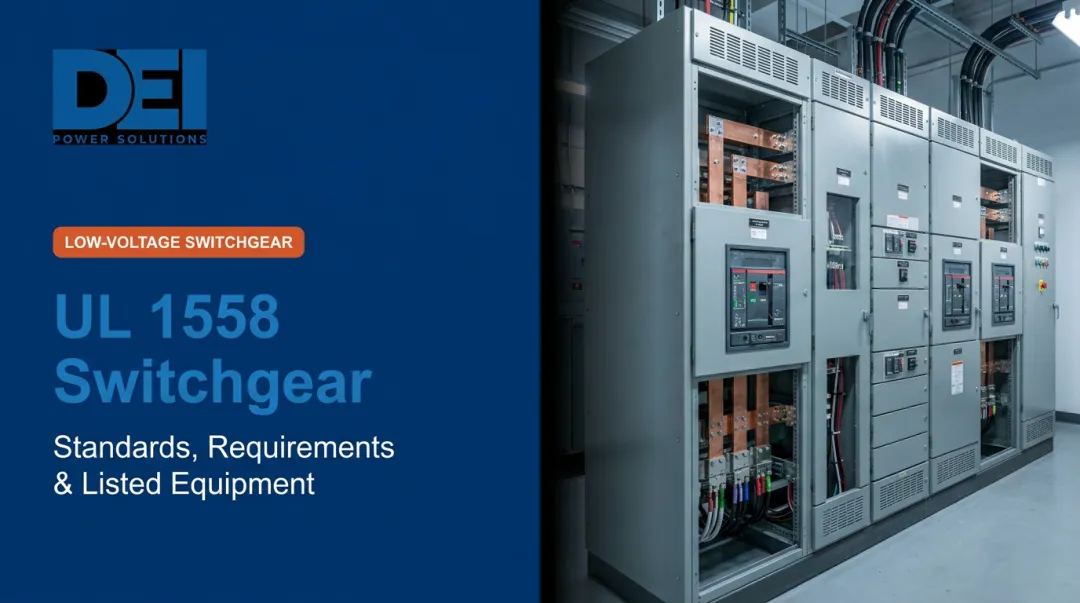
Switchboard example: A complete switchboard panel carries a UL Listed (or C UL US Listed) mark as an assembly. Internal components — bus bars, breakers, control devices — may individually carry UL Recognized marks. Inspectors and AHJs evaluate the mark on the complete assembly, not the internal components in isolation.
Quick Comparison
| Mark | Scope | Applies To | Canadian Market? |
|---|---|---|---|
| UL Listed | U.S. only | Complete products | No |
| C UL US Listed (cULus) | U.S. + Canada | Complete products | Yes |
| UL Recognized | Component level | Parts within a system | No |
The "UL Approved" Problem
"UL Approved" is not a real UL designation. UL's official terminology covers Listed, Recognized, Classified, and Certified. Using "UL Approved" in specifications or procurement documents creates ambiguity and can complicate AHJ review.
Understanding which mark applies — and at what level — is the first step toward writing accurate specs and avoiding field rejections.
Why C UL US Certification Matters for Electrical Equipment
Code and Regulatory Compliance
The NEC does not require every piece of electrical equipment to carry an NRTL listing — but it does require all equipment to be acceptable to the AHJ, and specific NEC articles (including 110.3(B) and 110.3(C)) require that listed or labeled equipment be installed according to its listing conditions. In practice, most AHJs require NRTL-listed equipment for new installations.
Equipment that arrives without a C UL US or UL Listed mark faces one of two paths:
- AHJ rejection — requiring substitution with listed equipment
- Field evaluation under NFPA 790 , where a qualified evaluation body assesses the installed equipment and applies a UL Evaluated Label if it complies
Field evaluations take time and cost money. Specifying listed equipment from the start avoids that path entirely.
Safety Assurance Through Ongoing Compliance
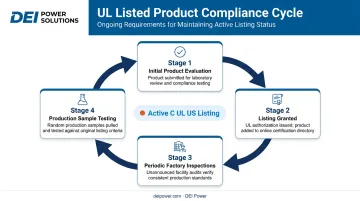
C UL US certification isn't a one-time test. UL's Follow-Up Services program includes periodic onsite factory inspections and production sample testing to confirm that manufacturing continues to meet the original certification requirements. UL can suspend or withdraw listings if compliance lapses.
This ongoing surveillance matters for buyers: it means the listed product on the shelf today was manufactured under the same standards as the product that passed the original evaluation — not one that passed once and then quietly drifted from spec.
What to look for in a listed product:
- Active listing status verifiable in UL's Product iQ database
- Manufacturer participation in UL's Follow-Up Services program
- Consistent factory marks matching the original listing category
Procurement Implications
For low-voltage power distribution, the listing should cover the complete assembly as a validated unit — not just individual components. Procurement teams can confirm this by checking that the certification applies to the finished switchboard, not just its parts.
Manufacturers like DEI Power, which produces UL 891-listed switchboards, supply submittals and compliance documentation with each order. That documentation supports AHJ approval without requiring additional evaluation steps on-site.
How to Verify a C UL US Listing
Never rely on the physical mark or manufacturer's spec sheet alone — counterfeit and misapplied marks exist, and UL maintains a Market Surveillance program to address this. Verification takes minutes and can prevent costly compliance failures down the line.
Use UL Product iQ
UL Product iQ is UL's official certifications database, free to access after registration. It replaced the older Online Certifications Directory and is the authoritative source for listing verification.
You can search by:
- Manufacturer or company name
- Model number
- Category Control Number (CCN) or category description
- UL file number
- Product type
Once you've located the product, confirm the details in the database match what's on the physical label.
What to Match
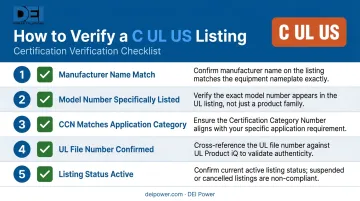
When verifying a listing, confirm all of the following align:
- Manufacturer name matches the product label
- Model number is specifically listed — not just the manufacturer's name
- CCN corresponds to the correct product category for your intended application
- UL file number on the product label matches the database record
- Listing status is active, not suspended or withdrawn
If anything doesn't match — or if the mark looks unusual — report it through UL's online concern reporting portal before moving forward.
Frequently Asked Questions
What does the C on a UL listing mark mean?
The lowercase "c" to the left of the UL circle indicates the product has been evaluated against Canadian standards and codes by UL LLC. It means the product is accepted by Canadian code officials, AHJs, and regulatory bodies — in addition to any U.S. standards the product meets.
What is the difference between cULus listed and UL listed?
A standard UL Listed mark certifies a product for the U.S. market only. The cULus (C UL US) mark adds Canadian standards evaluation, making the product accepted in both countries without requiring separate national certifications.
Is cULus the same as CSA certified?
Related, but not identical. A cULus mark is issued by UL LLC after testing against U.S. and Canadian standards; a CSA mark is issued directly by the Canadian Standards Association. Both are recognized in Canada under accreditation frameworks, but they come from different organizations and may not cover identical product scopes.
What is the difference between UL listed and UL recognized?
UL Listed applies to complete, stand-alone products evaluated for a specific use category. UL Recognized applies to components intended for factory installation inside a larger listed product. A Recognized Component mark does not function as a finished-product listing — the complete assembly still needs to be listed as a whole.
How do I verify if a product is cULus listed?
Search UL Product iQ by manufacturer name, model number, CCN, or UL file number. Confirm the listing is active and that the product category matches your intended application — don't stop at confirming the manufacturer's name is in the database.
Does cULus certification expire or need renewal?
There is no fixed expiration date, but manufacturers must maintain compliance through UL's Follow-Up Services program, which includes periodic factory inspections and production sample testing. UL can suspend or withdraw a listing if a manufacturer falls out of compliance, so always verify current status in Product iQ before procurement.