Introduction
A missing or misapplied certification mark can stop a project cold at inspection — or worse, create liability after installation. The cULus mark on switchboards, panelboards, and distribution gear is one of the most commonly referenced marks in commercial and industrial electrical work, yet few people outside of compliance roles can explain precisely what it certifies or who stands behind it.
Understanding this mark matters. The difference between UL, cUL, and cULus isn't just alphabet soup—it determines where your equipment can legally be installed, whether it will pass inspection, and if it meets the safety standards required by the National Electrical Code (NEC).
This article breaks down what cULus listed actually means, how it differs from related marks, and why it's critical when sourcing power distribution equipment for data centers, healthcare facilities, industrial plants, and utility infrastructure projects.
Key Takeaways
- cULus Listed means a product is certified by UL to meet both U.S. and Canadian safety standards under a single mark
- The mark is issued by UL, an OSHA-accredited Nationally Recognized Testing Laboratory (NRTL)
- NEC compliance requires NRTL listing; equipment without it will fail electrical inspection
- DEI Power's UL 891-certified switchboards carry the cULus mark, simplifying cross-border projects and removing dual-certification overhead
What Does cULus Listed Mean?
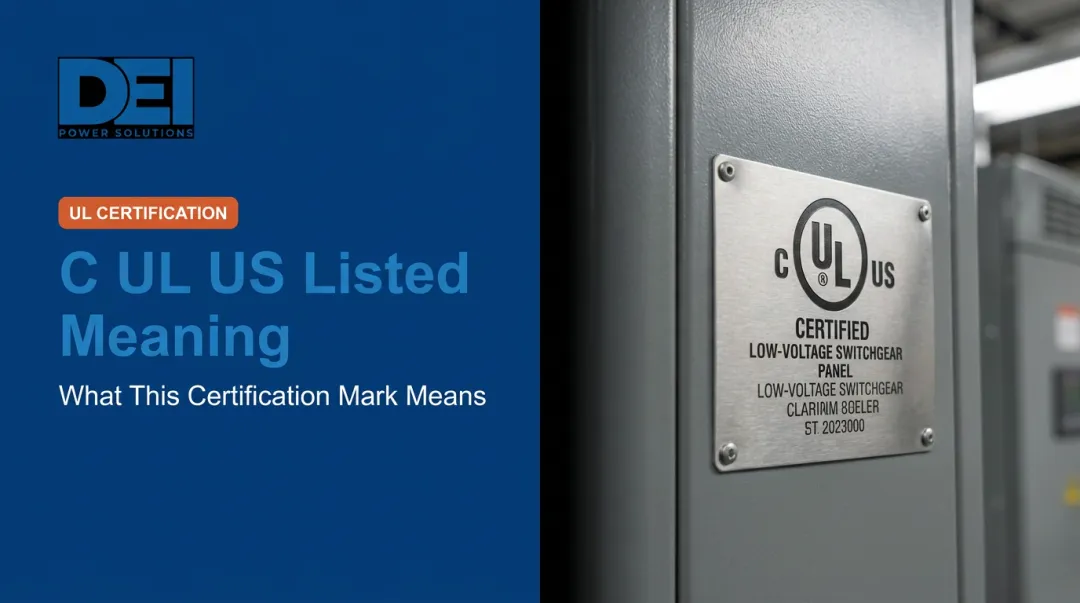
The cULus mark is a product certification issued by Underwriters Laboratories (UL), a globally recognized Nationally Recognized Testing Laboratory (NRTL) accredited by OSHA. When you see this mark on a switchboard or panelboard, it signals the product has been independently tested and confirmed to meet applicable safety standards for both the United States and Canada.
Breaking Down the Mark
Each element of the cULus designation has specific meaning:
- "c" = Certified to Canadian standards (CSA C22.2 series)
- "UL" = Tested and listed by Underwriters Laboratories
- "us" = Meets U.S. safety standards
Together, cULus means the product is certified for safe use in both countries under a single mark—eliminating the need for separate U.S.-only and Canada-only labels.
Listed vs. Recognized: A Critical Distinction
cULus Listed products are complete, end-use products ready for installation. This differs from UL Recognized components, which are sub-assemblies (like circuit breakers or transformers) tested for incorporation into a larger Listed product. A switchboard is Listed; the individual breaker inside it may be Recognized.
This distinction matters during inspection. Authorities Having Jurisdiction (AHJs) require Listed equipment—Recognized components alone won't pass code.
Verification Through UL Product iQ
UL maintains a publicly searchable database where any cULus listed product can be verified by its file number. For procurement teams and engineers, this documented traceability is what satisfies AHJ requirements before installation begins.
Common Products Carrying the Mark
Typical electrical products bearing the cULus mark include:
- Switchboards and panelboards
- Circuit breakers and transformers
- Power distribution units (PDUs)
- Remote power panels (RPPs)
- Electrical control panels
For power distribution projects, switchboards certified to UL 891 (low-voltage switchboards) and panelboards to UL 67 are the most common applications.
DEI Power's switchboards carry UL 891 certification with the cULus listing — tested and accepted for installations across North America, with the documentation to prove it at inspection.
Breaking Down the cULus Mark: cUL vs. UL vs. cULus
Not all UL marks are created equal. Here's how they differ:
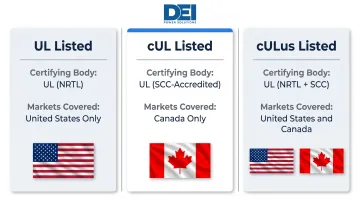
A product marked "UL Listed" (without the "c") has been tested to U.S. standards only—typically ANSI/UL standards recognized under OSHA's NRTL program. It's certified for sale and installation in the United States but doesn't automatically qualify for Canadian markets.
The "cUL" mark (with no "us") works the other direction: tested to Canadian standards (CSA C22.2 series) by UL and accepted in Canada, but not specifically certified to U.S. standards under this mark alone.
The cULus combined mark covers both. The product has been tested to U.S. and Canadian standards simultaneously, earning dual-market acceptance through a single certification process—making it the most comprehensive of the three.
Quick Comparison
| Mark | Certifying Body | Markets Covered |
|---|---|---|
| UL Listed | UL (NRTL) | United States only |
| cUL Listed | UL (SCC-accredited) | Canada only |
| cULus Listed | UL (NRTL + SCC) | United States and Canada |
For contractors and engineers specifying equipment across both markets—say, a data center campus with facilities in both Ontario and Ohio—the cULus mark means one spec covers both sites. No separate equipment lists, no re-certification, no last-minute substitutions at the job site.
Why cULus Listing Matters for Electrical and Power Equipment
NEC and Code Compliance
The U.S. National Electrical Code (NFPA 70) explicitly requires electrical equipment to be listed and labeled by an NRTL before installation:
- NEC 110.3(C): "Product testing, evaluation, and listing shall be performed by recognized qualified electrical testing laboratories."
- NEC 110.3(B): "Listed or Labeled equipment shall be installed and used in accordance with any instructions included in the Listing or Labeling."
Without a recognized listing like cULus, equipment cannot legally be used on most commercial or industrial projects. AHJs will reject it during inspection, halting progress and forcing costly rework.
Liability and Insurance Risk
Installing non-listed equipment voids insurance coverage in most commercial policies and exposes contractors, facility owners, and engineers to legal liability if an electrical failure or fire occurs.
Installing non-listed equipment voids insurance coverage in most commercial policies and exposes contractors, facility owners, and engineers to legal liability if an electrical failure or fire occurs.
NFPA data shows local fire departments responded to an average of 16,930 non-home fires involving electrical distribution and lighting equipment annually from 2012–2016, causing $718 million in direct property damage per year. Electrical failure or malfunction was a factor in 75% of those fires. For contractors and facility owners, listing documentation is one of the clearest ways to reduce that exposure.
Mission-Critical Environments
In data centers, healthcare facilities, utilities, and industrial plants, unplanned downtime carries real operational and financial consequences. cULus listing provides documented assurance that equipment has passed rigorous safety and performance testing — reducing the risk of field failures before they happen.
DEI Power's switchboards are built to UL 891 standards with the cULus listing, meaning they're engineered for high-demand environments where system reliability directly impacts operations. For customers in these sectors, the listing isn't optional—it's foundational.
Switchboard and Switchgear Standards
For power distribution equipment, the governing UL standards are:
- UL 891: Low-voltage switchboards (nominally rated 1,000V or less, short-circuit currents up to 200,000A)
- UL 67: Panelboards for commercial and industrial applications
- UL 1558: Metal-enclosed low-voltage power circuit breaker switchgear
DEI Power's switchboards carry UL 891 certification with the cULus listing, ensuring they're accepted for U.S. and Canadian installations without additional compliance burden.
Consequences of Non-Compliance
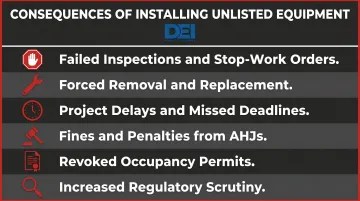
Installing unlisted equipment can result in:
- Failed inspections and stop-work orders
- Forced removal and replacement of equipment
- Project delays and missed deadlines
- Fines and penalties from AHJs
- Revoked occupancy permits
- Increased regulatory scrutiny on future projects
On a tight-schedule project, even a single failed inspection can trigger weeks of rework, procurement delays, and potential liquidated damages.
How Products Earn a cULus Listing
The cULus certification process is rigorous and ongoing. Here's how it works:
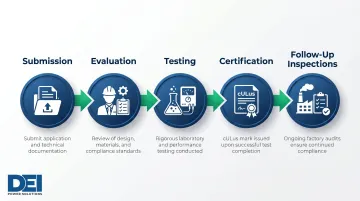
The Certification Process
Submission: Manufacturer submits the product to UL with complete documentation (specifications, component details, manufacturing location, test equipment details).
Evaluation: A dedicated UL project engineer evaluates the product against applicable standards (e.g., UL 891 for switchboards).
Testing: Product samples are tested at a UL facility to confirm compliance with safety and performance requirements.
Certification: If the product passes, UL issues a certification and assigns a file number. The manufacturer is authorized to apply the mark.
Follow-Up Inspections: UL conducts ongoing factory audits to ensure continued compliance. This is a mandatory, ongoing program—not a one-time approval.
The Follow-Up Services (FUS) Program
What distinguishes a Listed product from a self-declared or third-party-claimed compliant product is UL's Follow-Up Services program. Regular factory inspections mean the listing is a maintained status, verified through ongoing audits of manufacturing processes, materials, and quality controls.
Inspections focus on:
- Confirming the product being manufactured matches what was originally tested
- Examining completed products and their components
- Reviewing component markings and traceability
- Verifying use of UL Listed or Recognized components
This ongoing oversight is why the cULus mark carries credibility with inspectors and AHJs. That credibility is earned through audits, not assumed after a single test.
Cost and Timeline
Costs and timelines vary by product category and applicable standard, and UL does not publish fixed pricing. What buyers can count on is that the process involves documented, third-party verification at every stage — from initial testing through ongoing factory audits.
cULus vs. Other Certifications: CSA, CE, and NRTL Marks
cULus vs. CSA Certified
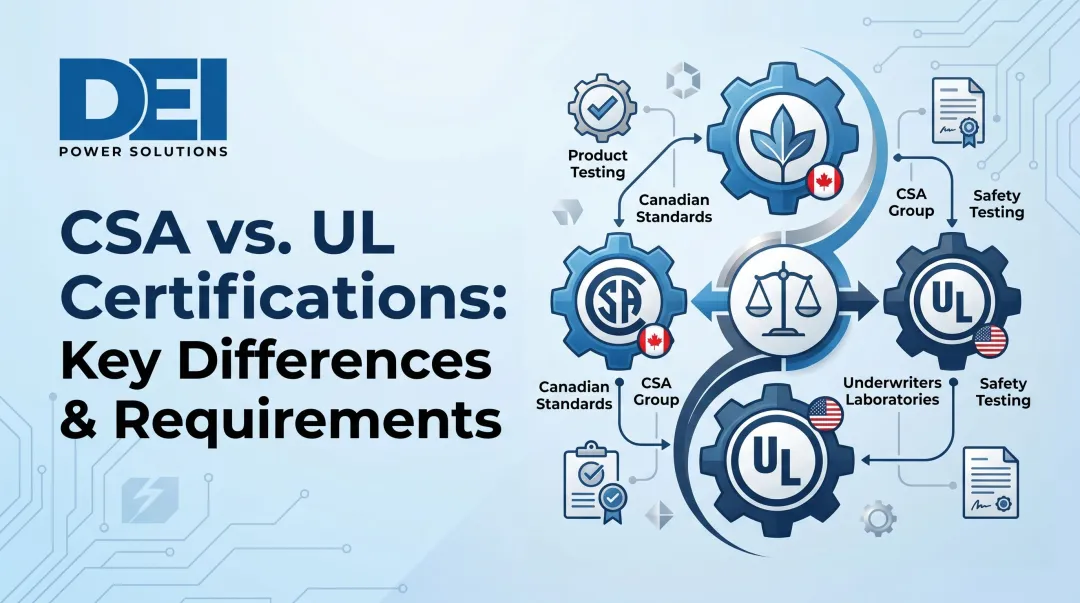
CSA Group is also an OSHA-accredited NRTL that issues its own certification mark. A product with cULus listing meets the same underlying safety standards as a CSA-certified product for North American use.
The 2006 UL-CSA Memorandum of Understanding established mutual recognition of test results for harmonized standards. In practice, AHJs and inspectors treat both marks as equivalent for code compliance.
cULus vs. CE Marking
CE marking is a self-declaration used for products sold in the European Economic Area (EEA). Key differences:
- Not third-party certified: CE is a manufacturer self-declaration, not issued by an independent laboratory
- Different regulatory framework: CE covers EU directives (e.g., Low Voltage Directive, EMC Directive), not NFPA or CSA standards
- Not a substitute for cULus: CE marking doesn't satisfy NEC requirements or OSHA NRTL regulations in North America
For global projects, both marks may be required depending on the destination country.
The cRUus Mark
While the comparisons above cover competing certification schemes, the cRUus mark is a related UL mark that's easy to confuse with cULus. It applies to sub-assemblies or components intended for use inside Listed products — not complete end-use equipment.
This distinction matters when specifying equipment. A cRUus-marked component (like a power supply or relay) must be incorporated into a cULus Listed assembly (like a switchboard) to meet code requirements for installation. Specifying individual components with cRUus marks alone won't satisfy AHJ inspection requirements for end-use equipment.
What to Look for When Specifying cULus Listed Equipment
Check UL's Product iQ Before You Buy
Always verify a product's cULus listing through UL's Product iQ database using the manufacturer's UL file number. A mark printed on a product without a verifiable file number is not a valid listing, and purchasing based on an unverified claim can result in failed inspections, rejected submittals, and expensive field corrections.
Confirm the Listing Covers Your Specific Configuration
cULus listings are granted for specific designs, voltage ratings, and configurations. A product modified or field-altered beyond what was tested may no longer be covered by the listing.
Custom configurations are especially common in switchboards — making this a frequent compliance risk. NEC 110.3(B) warns that "field modifications to listed or labeled equipment can void the listing." Unauthorized modifications expose the modifier to civil and potentially criminal liability.
Work with a Manufacturer That Holds the Relevant Listing
Given those liability risks, the safest path is specifying equipment from a manufacturer whose listing already covers your project's voltage, bussing, and layout requirements. That eliminates the need for field modifications that void coverage.
For complex power distribution projects, DEI Power's UL 891-certified switchboards are configured before production begins — with in-house engineering support to confirm specifications match the listing — simplifying procurement, inspection, and commissioning.
Require Full Documentation at Delivery
At the time of purchase or delivery, confirm the manufacturer provides:
- UL file number
- Certified test reports or compliance datasheets
- Installation and use instructions per the listing
- Submittal documentation for AHJ approval
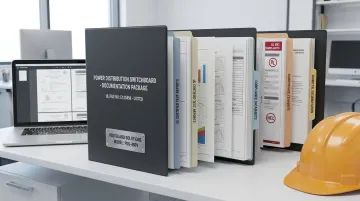
This documentation streamlines the inspection process and provides a clear compliance trail if questions arise during commissioning.
Frequently Asked Questions
What does "c.UL.us.listed" mean?
The "c.UL.us.listed" mark is simply the formatted version of the cULus Listed mark. "c" stands for Canada, "UL" for Underwriters Laboratories, and "us" for United States, confirming the product meets safety standards for both countries under a single certification.
What is the difference between UL and C UL?
UL listing covers U.S. standards only (ANSI/UL), while cUL (with the "c" prefix) means the product has been tested to Canadian standards (CSA C22.2 series) by UL. cULus combines both, certifying the product for use in both countries under a single mark.
What is better, CE or UL?
CE and UL serve different markets and regulatory frameworks. CE is required for the European EEA market and is a manufacturer self-declaration, while UL/cULus is third-party tested and required for North American markets. The right mark depends entirely on where the equipment will be installed. Neither is universally superior.
What does "c RU US" mean?
cRUus is UL's Recognized Component mark. It applies to components or sub-assemblies tested for use inside a complete Listed product. The cULus Listed mark, by contrast, applies to finished, ready-to-install equipment intended for end-use installation.
Is cULus listing required by law?
The National Electrical Code (NFPA 70), adopted by 45 states as of March 2026, requires electrical equipment to be listed by an NRTL. UL certification isn't a direct federal mandate, but this adoption makes cULus listing effectively mandatory for most commercial and industrial installations.
Does cULus listing apply to switchboards and switchgear?
Yes. Switchboards and switchgear can carry cULus listings under specific UL standards such as UL 891 (low-voltage switchboards) and UL 1558 (metal-enclosed switchgear). These listings are required for equipment used in commercial, industrial, and utility applications across the U.S. and Canada.