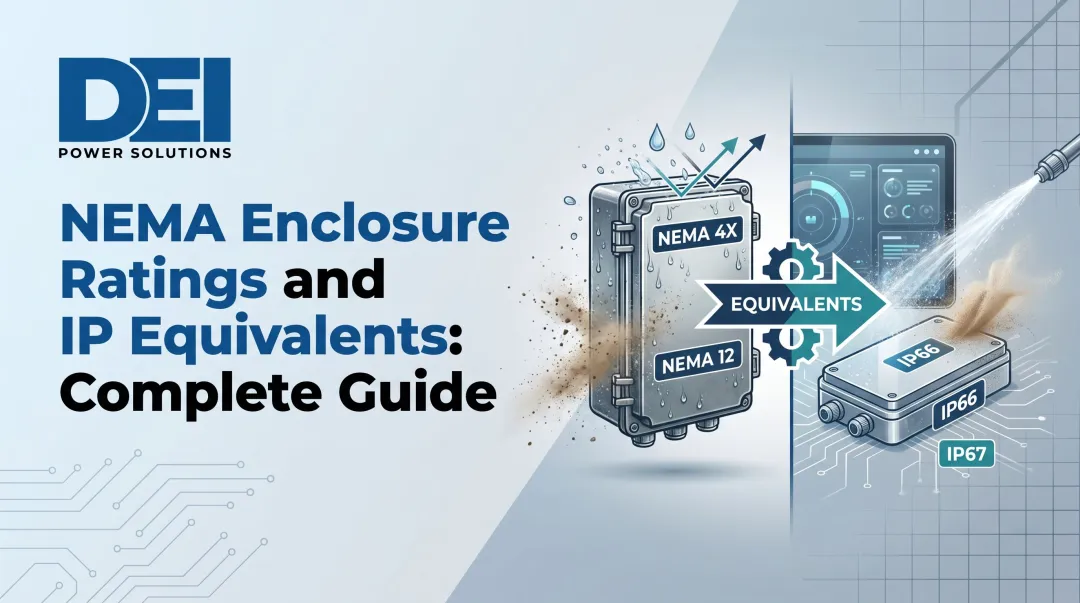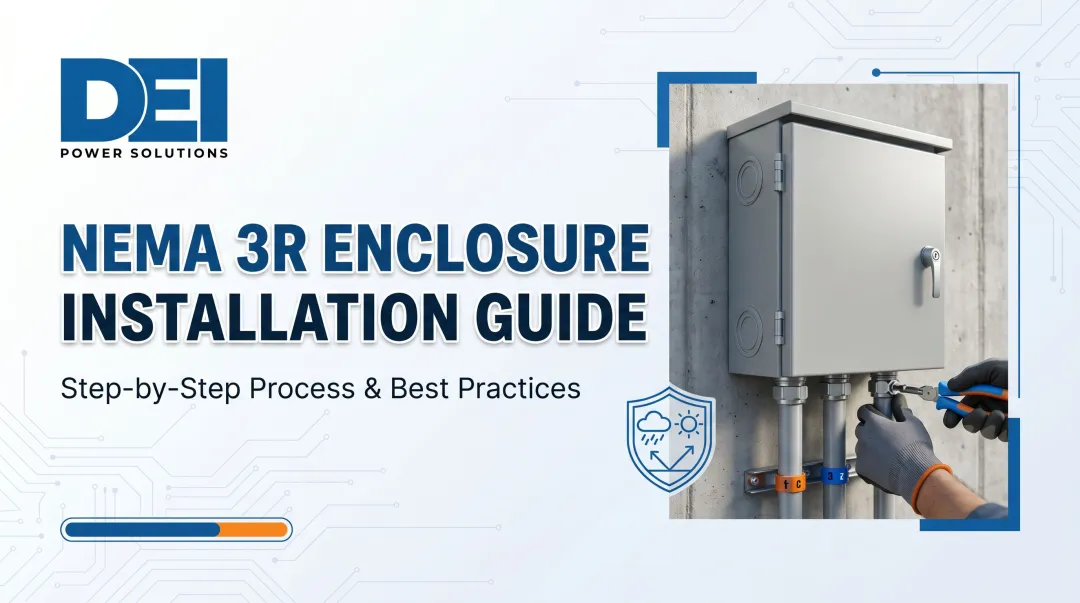
That assumption leads to real problems: equipment specified for washdown areas, coastal sites, or dusty environments that fails prematurely because the enclosure wasn't rated for those conditions. Conversely, over-specifying NEMA 4X where NEMA 3R is perfectly code-compliant adds cost with no functional benefit.
This article covers exactly what NEMA 3R means per the official NEMA standard, what it protects against (and what it deliberately excludes), how it compares to NEMA 3, 4, and 4X, and a practical framework for selecting the right rating for your project.
Key Takeaways
- NEMA 3R protects against rain, sleet, snow, falling dirt, and external ice formation — but it is not dust-tight or watertight
- "R" means rainproof only — dust protection found in standard NEMA 3 is intentionally left out
- NEMA 3R ≠ NEMA 4 — NEMA 4 requires a more demanding hose-directed water test and is fully watertight
- Drainage holes in NEMA 3R enclosures are a design feature, not a defect
- Use NEMA 4 or 4X when washdown, submersion risk, or corrosive environments are factors
What Does the NEMA 3R Rating Mean?
NEMA (National Electrical Manufacturers Association) establishes enclosure classifications under ANSI/NEMA 250-2020, which covers electrical enclosures rated up to 1,000 V. These ratings define environmental protection levels — not product quality or electrical performance.
The Official Type 3R Definition
Per NEMA's published enclosure type documentation, a Type 3R enclosure is constructed for indoor or outdoor use to:
- Protect personnel against access to hazardous parts
- Protect equipment against falling dirt
- Protect against harmful effects from rain, sleet, and snow
- Remain undamaged by external ice formation
That's the complete protection list. Notice what's missing: windblown dust, hose-directed water, submersion, corrosive agents.
What the "R" Actually Means
Schneider Electric's technical documentation describes Type 3R as "rainproof only" — not waterproof or watertight. The practical distinction is that NEMA 3 (the base standard) includes windblown dust protection and passes dust ingress testing. NEMA 3R deliberately removes that requirement.
That omission reflects a deliberate design choice. Most outdoor electrical distribution equipment doesn't require dust-tight protection — reliable weather resistance at a practical cost covers the majority of real-world installations.
Personnel Protection
NEMA 3R also requires protection against personnel access to hazardous parts. This means the enclosure must prevent finger or similar object contact with live components, making it safe in open-access areas such as parking structures, equipment yards, and building exteriors.
IP Rating Note
NEMA's official conversion table maps Type 3R to IP14 — not IP54, which is a common misconception. NEMA explicitly states that IEC IP designations cannot be directly equated with NEMA Type numbers, and per NEC Section 110.28, IP ratings are not a substitute for NEMA Enclosure Type ratings. Engineers working across both standards should confirm the enclosure's tested ingress protection class against the actual environmental exposure of the installation — not assume one rating satisfies the other.
What NEMA 3R Protects Against — And What It Doesn't
What NEMA 3R Covers
NEMA 3R provides verified protection against:
- Falling dirt — loose debris dropping from above
- Rain, sleet, and snow — standard outdoor precipitation in most climates
- External ice formation — ice buildup that could interfere with operation or penetrate the enclosure
- Incidental personnel contact — prevents access to live parts
NEMA 3R enclosures include drainage openings at the bottom by design. Because the rating doesn't require a watertight seal, small amounts of moisture can enter during heavy precipitation — drainage holes let that water escape before it accumulates. NEMA 250-2020 specifies this as a permitted design feature, not a manufacturing flaw.
Many NEMA 3R products also include louvers or vented panels to prevent heat buildup in warm outdoor climates. This isn't required by the standard, but it's common in outdoor power distribution enclosures.
What NEMA 3R Does NOT Cover
NEMA 3R provides no protection against:
- Windblown dust or airborne particulates
- Hose-directed or pressurized water
- Washdown conditions
- Oil or coolant ingress
- Submersion (temporary or prolonged)
- Corrosive or caustic environments
Rain at steep angles, pressure washing, or a directed water stream can push moisture past the enclosure's defenses. Harsh atmospheres — coastal salt air, chemical plant environments, sandy desert conditions — will degrade unprotected steel over time. If any of these factors are present at your site, NEMA 3R is the wrong specification.
How NEMA 3R Enclosures Are Tested
NEMA 250-2020 includes specific rain and icing test sections. The test requirements specify two core scenarios:
- Rain/sleet simulation — water spray is applied to the top and sides of the enclosure to simulate wind-driven outdoor precipitation; the interior must remain dry after the test
- Ice formation test — the enclosure is subjected to external icing conditions; the test confirms that ice neither penetrates the enclosure nor prevents it from being opened and operated
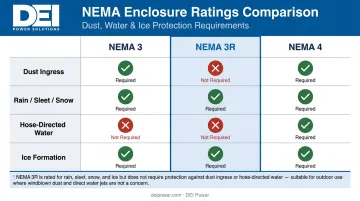
Passing both tests earns the Type 3R rating — but those two tests are the ceiling, not the floor. The table below shows what Type 3R does and does not cover compared to adjacent NEMA ratings:
| Test | NEMA 3 | NEMA 3R | NEMA 4 |
|---|---|---|---|
| Dust ingress | ✅ Required | ❌ Not required | ✅ Required |
| Rain/sleet/snow | ✅ Required | ✅ Required | ✅ Required |
| Hose-directed water | ❌ Not required | ❌ Not required | ✅ Required |
| Ice formation | ✅ Required | ✅ Required | ✅ Required |
UL also certifies Type 3R enclosures through its electrical enclosure certification program. Because NEMA certification relies on manufacturer self-declaration, UL's independent testing provides a separate verification that specifiers can reference on project submittals.
NEMA 3R vs. NEMA 3, NEMA 4, and NEMA 4X
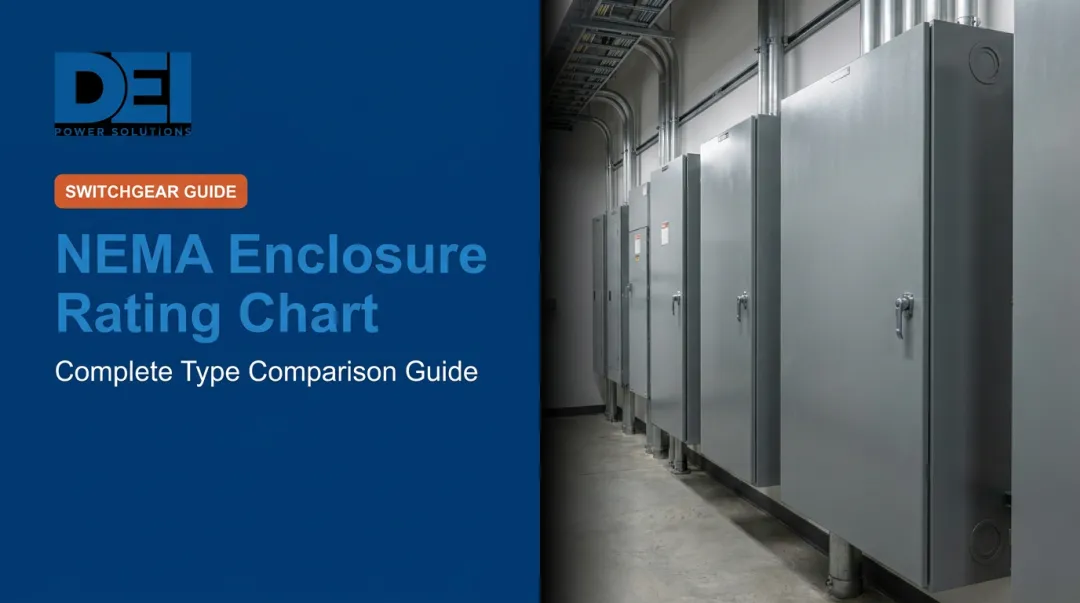
Full Comparison Table
| Rating | Dust-Tight | Rain/Sleet/Snow | Watertight (Hose) | Ice Formation | Corrosion-Resistant | Typical Use Case |
|---|---|---|---|---|---|---|
| NEMA 3 | ✅ Yes (incl. windblown dust) | ✅ Yes | ❌ No | ✅ Undamaged | ❌ No | Outdoor sites with windblown dust exposure |
| NEMA 3R | ❌ Falling dirt only | ✅ Yes | ❌ No | ✅ Undamaged | ❌ No | Standard outdoor electrical distribution |
| NEMA 4 | ✅ Yes | ✅ Yes | ✅ Yes | ✅ Undamaged | ❌ No | Washdown, pressurized-water environments |
| NEMA 4X | ✅ Yes | ✅ Yes | ✅ Yes | ✅ Undamaged | ✅ Yes | Corrosive, coastal, or chemical environments |
NEMA 3R vs. NEMA 3
Dust protection is the single distinction between these two ratings. NEMA 3 passes dust ingress testing and covers windblown dust; NEMA 3R does not. In all other respects — rain, ice, personnel protection — they're equivalent.
Choose NEMA 3 over 3R when windblown dust is a real concern: desert regions, active construction sites, quarry environments, or any location with significant airborne particulates.
NEMA 3R vs. NEMA 4
NEMA 4 requires a hose-directed water test confirming the enclosure is fully watertight — not just rain-resistant. The enclosure must be gasketed and clamped to prevent water ingress from a directed stream.
Choose NEMA 4 for washdown cleaning environments, food or beverage processing, pharmaceutical production, or sites where heavy precipitation hits enclosures at extreme angles.
NEMA 3R vs. NEMA 4X
NEMA 4X meets all NEMA 4 requirements and adds corrosion resistance — typically through Type 304 or Type 316 stainless steel, or fiberglass (glass-fiber-reinforced thermoset polyester). Type 316 stainless is the stronger choice in chloride-heavy environments; its improved pitting resistance makes it standard for marine and offshore installations.
NEMA 4X is the right call when:
- Chemical processing plants or oil and gas facilities require corrosion-proof enclosures
- Coastal installations face salt spray and humidity year-round
- Maintenance crews regularly use caustic cleaners on nearby equipment
When to Use NEMA 3R: Common Applications
NEMA 3R is the standard specification for a wide range of outdoor electrical equipment:
- Outdoor transfer switches and ATS gear (Eaton lists NEMA 3R alongside NEMA 1, 4, and 4X as a standard option)
- Electrical metering equipment, including surface-mounted and pad-mounted outdoor installations
- Service entrance switchboards and panelboards — Siemens panelboard documentation specifically designates NEMA 3R for service entrance use
- Parking lot and roadway lighting panels (confirmed in Eaton lighting contactor documentation as Type 3R)
- HVAC disconnects and controls for rooftop and exterior installations
- Traffic signal controller cabinets, such as the Econolite Safetran 303-8, which is built to NEMA 3R specs
- Telecom, network, and pump control enclosures where rain exposure is expected but washdown conditions are not
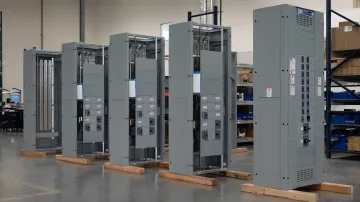
The common thread across these applications: outdoor exposure to rain and sleet, but no pressure washing, submersion, or corrosive chemical contact. That's the sweet spot where NEMA 3R delivers the protection you need without the cost premium of 4X or stainless enclosures.
DEI Power's NEMA 3R Product Line
For contractors and engineers specifying outdoor power distribution equipment, DEI Power manufactures UL 891-certified switchboards, switchgear, and remote power panels with optional NEMA 3R enclosures across a full amperage range:
- Switchboards and switchgear: 400A–4000A in NEMA 1 or NEMA 3R configurations (including 600A, 800A, 1000A, 1200A, 2500A, 3000A, and 4000A)
- Remote Power Panels: 225A (up to 42 branch circuits) and 400A (up to 60 branch circuits) in NEMA 3R
- Panelboards: 400A–4000A with NEMA 3R enclosures
Each unit is rain-tested in-house before shipment and rated for exterior wall or pad-mounted applications. All equipment is UL 891 certified, built with Siemens components, and available with BABA-compliant domestic manufacturing for infrastructure and utility projects.
Where NEMA 3R Is the Wrong Choice
Not every outdoor application qualifies. Skip NEMA 3R if your installation involves any of the following:
- Car wash facilities or any pressure-wash environment
- Food processing, pharmaceutical, or beverage production
- Coastal or marine industrial installations
- Chemical processing plants with caustic exposure
- Dusty environments like active quarries or desert construction sites
These conditions call for NEMA 4, 4X, or NEMA 12 (for indoor dust and oil-resistant applications).
How to Choose the Right NEMA Rating
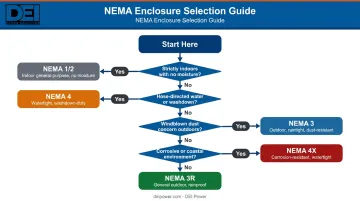
Work through these four questions before specifying an enclosure:
- Indoors or outdoors? If strictly indoors with no moisture exposure, NEMA 1 or 2 is sufficient.
- Any hose-directed water or washdown? If yes, NEMA 4 minimum.
- Is dust a concern? If yes and outdoors, NEMA 3 (not 3R). If indoors with oil/dust, NEMA 12.
- Corrosive environment? Coastal, chemical, or caustic cleaning — NEMA 4X.
If none of those conditions apply and the equipment will face standard outdoor weather — rain, snow, ice — NEMA 3R is the appropriate and cost-effective choice.
That said, the rating you choose carries real cost and liability implications in both directions:
- Over-specifying (4X where 3R suffices): NEMA 4X enclosures use 304/316 stainless steel or fiberglass — materials with meaningful cost premiums over the carbon steel in standard NEMA 3R units. You pay more without gaining any functional benefit.
- Under-specifying (3R in a washdown or corrosive environment): Creates liability exposure, accelerates equipment failure, and can trigger code violations.
Getting the rating right also means verifying what code actually requires. NEC Section 110.28 addresses enclosure types for electrical equipment up to 1,000 V, covering switchboards, panelboards, and transfer switches. Local adopted codes may set minimum NEMA ratings for specific installation locations. Always confirm the applicable requirements for your jurisdiction — code minimums may mandate NEMA 3R or higher for outdoor or semi-protected installations.
DEI Power's engineering and sales team reviews enclosure specifications before order release, helping contractors and engineers confirm the correct rating upfront — and avoid field adjustments or costly errors down the line.
Frequently Asked Questions
Is a NEMA 3R enclosure rated for outdoor use?
Yes. NEMA 3R is explicitly rated for both indoor and outdoor use, designed to protect against rain, sleet, snow, and external ice formation. It's suited for moderate outdoor conditions, but it's not fully watertight and should not be used where hose-down cleaning or corrosive exposure is a factor.
Is NEMA 4 better than NEMA 3R?
NEMA 4 provides a higher level of protection: it's fully watertight and passes a hose-directed water test that NEMA 3R does not require. For demanding outdoor environments with washdown or heavy water exposure, NEMA 4 is the right choice — NEMA 3R is the appropriate and more cost-effective specification for standard weather protection.
What is the difference between NEMA 3 and NEMA 3R?
NEMA 3 includes dust protection and passes windblown dust ingress testing; NEMA 3R removes that requirement entirely. Both handle rain, sleet, snow, and ice. If windblown dust is a concern for your installation, choose NEMA 3 — not 3R.
Does NEMA 3R protect against dust?
No. NEMA 3R is not classified as dust-tight and does not require passing dust ingress testing. For outdoor environments with windblown dust, NEMA 3 is the appropriate rating; for indoor dust and oil exposure, NEMA 12 is the typical specification.
What is the IP equivalent of NEMA 3R?
NEMA's official conversion table maps Type 3R to IP14, not IP54 as is commonly assumed. NEMA explicitly states that IEC IP ratings cannot be directly equated with NEMA Type numbers, and NEC 110.28 does not permit IP ratings as substitutes. Verify specific protection requirements independently rather than relying on conversion tables.
Can NEMA 3R enclosures be used indoors?
Yes. NEMA 3R is rated for both indoor and outdoor use. It's commonly deployed in utility rooms, mechanical spaces, or partially protected areas where some moisture exposure is possible.