EUSERC is a critical but often unfamiliar standard in utility electrical work. Understanding what EUSERC is, what it governs, and how to ensure compliance can mean the difference between on-time project delivery and costly delays waiting for utility approval. This guide covers everything engineers, contractors, and facility teams need to know about Electric Utility Service Equipment Requirements and how to navigate compliance on real projects.
TLDR:
- EUSERC is a non-profit standards body uniting 80+ electric utilities across 14 Western U.S. states
- Standards govern meter sockets, CT compartments, and utility interconnection equipment dimensions
- EUSERC compliance requires utility-reviewed drawings, not third-party certification
- Individual utilities can override EUSERC baseline requirements with stricter local standards
- Projects need both UL 891 safety certification and EUSERC compliance for utility energization
What is EUSERC?
EUSERC stands for the Electric Utility Service Equipment Requirements Committee. It is a non-profit industry standards organization — not a regulatory agency — composed of electric utility companies that collaborate to define uniform technical requirements for utility service equipment.
Geographic Reach and Member Utilities
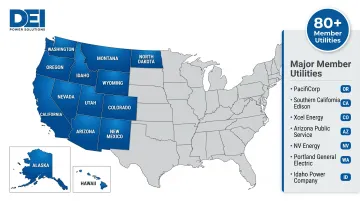
EUSERC brings together over 80 utilities from 14 U.S. states: Alaska, Arizona, California, Colorado, Hawaii, Idaho, Montana, Nevada, New Mexico, North Dakota, Oregon, Utah, Washington, and Wyoming. This Western United States focus makes EUSERC standards especially relevant for projects in California and neighboring states, though EUSERC requirements regularly appear in utility interconnection agreements across the country.
Member utilities include major providers such as:
- Los Angeles Department of Water and Power (LADWP)
- Pacific Gas & Electric (PG&E)
- Arizona Public Service Company (APS)
- PacifiCorp (Pacific Power/Rocky Mountain Power)
- Hawaiian Electric
- Idaho Power
- Portland General Electric
The organization also includes non-utility members like NEMA, the California Public Utilities Commission, UL Solutions, and California ISO.
Why EUSERC Exists
Before EUSERC's founding in 1983 through the merger of PUSERC and WUESSC (with collaborative roots dating to 1947), each utility maintained its own disconnected requirements for service equipment. This created real inconsistency for manufacturers and contractors working across multiple utility territories — a meter socket approved by one utility might be rejected by another 50 miles away.
EUSERC was formed to establish a common framework that utilities and equipment suppliers could both work from. That framework is member-driven: utilities collectively define what equipment must look like to connect to their grid, ensuring meters fit correctly, CT compartments meet dimensional requirements, and utility technicians can safely access and maintain equipment.
How EUSERC Develops Its Standards
Consensus-Based Committee Process
EUSERC operates through a collaborative, member-driven standards development process:
- Quarterly meetings bring together utility professionals from service planning, inspection, standards, and metering departments
- Manufacturer participation allows equipment suppliers to present updates on new code requirements and emerging technologies
- Direct feedback loops give meter service equipment manufacturers product feedback based on real-world utility field experience
- Training workshops expand technical knowledge and share best practices across member utilities
This consensus-based approach ensures that published requirements reflect agreed-upon minimums and configurations that work across diverse operating environments.
Published Standards and Drawing System
EUSERC publishes several key document types:
- Annual Requirements Manual — revised each year to reflect evolving grid technology
- Numbered Technical Drawings — covering everything from residential meter sockets (Drawing 301) to CT cabinets (Drawings 316-318) to switchboard configurations (400-series drawings)
- Member Acceptability Pages — published annually by each utility, indicating which EUSERC drawings they accept, reject, or modify
- Equipment Inspection Reports — documenting reviewed equipment configurations
Grid Technology Updates
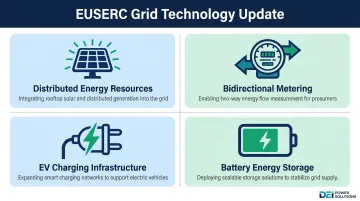
As utility grid infrastructure evolves, EUSERC updates its requirements to address new equipment configurations:
- Distributed energy resources — Solar-Ready service panels with dedicated breakers for supply-side interconnection
- Bidirectional metering — Requirements for net metering and customer-generated power flowing back to the grid
- EV charging infrastructure — Connection standards for high-amperage charging equipment
- Battery energy storage — Interconnection provisions for grid-tied storage systems
EUSERC revises its Requirements Manual annually, so confirm you're working from the current edition before specifying equipment.
The Utility Override Rule
EUSERC standards establish a baseline — but individual utilities can accept, reject, or modify any drawing or requirement for their service territory.
LADWP's 2025 Electric Service Requirements manual states it clearly: "Where differences occur between the Department's ESR and the EUSERC requirements, the ESR requirement specified shall take precedence."
In practice, that means the serving utility always has the final word:
- A CT cabinet configuration accepted by Rocky Mountain Power may be marked "Unacceptable" by LADWP
- Equipment meeting EUSERC specifications may still be rejected by a specific utility
- Always cross-check the serving utility's acceptability page against the EUSERC baseline before procurement
What EUSERC Standards Cover
Meter Sockets and Enclosures
EUSERC specifies dimensional, mechanical, and electrical requirements for meter sockets so utility meters can be installed consistently across service locations.
Key specifications include:
| Configuration | Jaw Count | Application |
|---|---|---|
| Single-phase, 3-wire | 4-jaw | 120/240V residential and light commercial |
| Single-phase, 3-wire | 5-jaw | 120/208V applications |
| Three-phase, 4-wire | 7-jaw | 208Y/120V or 480Y/277V |
| Three-phase CT metering | 13-jaw | CT-rated 3-phase, 4-wire |
| Single-phase CT metering | 6-jaw | EUSERC Drawing 339 |
Universal Requirements:
- Ring-type sockets only — ringless styles are prohibited across all reviewed EUSERC member utilities
- Safety sockets required for nonresidential/commercial applications (EUSERC 304/305)
- Manual bypass provisions for 201-400A single-phase services (EUSERC 302B)
- Meter height — center of meter between 42" and 72" above finished grade
Current Transformer (CT) Compartments
EUSERC governs CT compartment design within switchboards and metering enclosures, including spacing, door configuration, and sealing requirements.
Standard CT Cabinet Dimensions:
| Configuration | Width × Height × Depth | EUSERC Drawing |
|---|---|---|
| 1-Phase, 401-800A | 24"W × 48"H × 11"D | 317 |
| 3-Phase, 201-800A | 36"W × 48"H × 11"D | 318 |
| Line/Load Same Side | 48"W × 48"H × 14"D | Utility-specific |
CT Compartment Requirements:
- Bar-type CTs — required for CT cabinets using EUSERC mounting bases
- Window-type (doughnut) CTs — used in switchboard configurations; utility provides CTs but customer installs and secures
- Fault rating — 50,000A minimum on CT mounting base
- Doors — must be hinged (side-opening), sealable, with device to hold door open at 90° or more
- Sealing provisions — required on cabinet doors, test-bypass facility covers, and removable conduit fittings
- Top of CT mounting base — maximum 72" above finished grade
Clearances and Access Requirements
EUSERC sets minimum workspace dimensions so utility technicians can safely install, read, and maintain meters without obstruction:
- Minimum workspace — 78"H × 48"W × 48"D unobstructed area in front of equipment
- Conductor entry — customer service entrance conduits must exit CT cabinet on load side
- Separation — customer conductors not permitted in utility termination space
- Enclosure entry points — specified for both overhead and underground service configurations
Interconnection Requirements
Facilities connecting distributed generation to the utility grid must meet EUSERC interconnection requirements — and individual utilities enforce these closely. PG&E's Greenbook document 094670, for instance, requires residential "solar ready" panels to carry factory-installed labels confirming PG&E and EUSERC approval, including the location and ratings of generation sources.
Solar-Ready and DER provisions:
- Dedicated alternative energy circuit breaker on supply side
- Bidirectional meter capability for net metering
- Lockable disconnect switches
- Performance meter switchboard configurations for parallel generating systems
Utility-Specific Variations
While EUSERC establishes a common baseline, individual utilities specify variations. LADWP's acceptability coding system illustrates this:
- A (Accepts) — EUSERC drawing accepted as-is
- U (Unacceptable) — EUSERC drawing not accepted; consult utility ESR for alternative
- C (Accepts with variations) — Accepted with modifications; consult ESR for details
EUSERC Drawings 316-318 (CT cabinets), for example, are accepted by Rocky Mountain Power and Portland General Electric — but marked "Unacceptable" by LADWP. That distinction matters early: specifying equipment before confirming utility acceptance codes can trigger costly field changes or change orders down the line.
What It Means to Be EUSERC Compliant
Defining EUSERC Compliance
Equipment or an installation is EUSERC compliant when it meets the published technical requirements of the Electric Utility Service Equipment Requirements Committee and any additional requirements set by the specific utility serving that project location.
That dual-layer structure matters in practice: meeting EUSERC baseline standards does not automatically guarantee utility acceptance.
EUSERC Drawings and Submittal Requirements
EUSERC drawings are technical submittal documents showing that service equipment is configured to meet EUSERC requirements. These drawings are required by utilities before permitting interconnection or allowing equipment installation at the service point.
Manufacturer submittal obligations:
- Shop drawings must reference applicable EUSERC drawing numbers
- Include panel layout, sectional view, dimensions, and meter socket arrangements
- Must be submitted and approved before fabrication begins
- Require engineering stamp and signature (varies by utility)
- LADWP requires "appropriate ESR or EUSERC page references" on all submittals
What "EUSERC Approved" Really Means
"EUSERC approved" means a utility has reviewed and accepted equipment or drawings as meeting EUSERC standards for that specific project. This differs from UL listing or other third-party certifications — EUSERC itself does not operate a lab-based certification program.
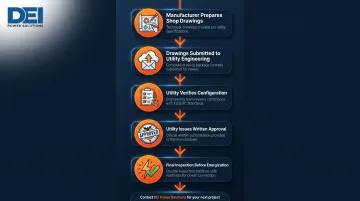
The approval process:
- Manufacturer prepares shop drawings referencing specific EUSERC drawing numbers
- Drawings submitted to serving utility's engineering department for review
- Utility verifies configuration meets EUSERC baseline plus utility-specific requirements
- Utility issues written approval before fabrication
- Final inspection occurs before energization
Anaheim Public Utilities requires three separate releases before energization: building inspector panel release, electrical inspector release, and APU electric service release.
EUSERC in Project Contracts
Contractors and engineers should expect EUSERC compliance language in utility construction and interconnection contracts. Knowing what these clauses mean — and what they require from your equipment submittals — prevents costly delays during review:
- "Vendor shall comply with EUSERC requirements for designing utility infrastructure"
- "All metering equipment must meet EUSERC requirements for meter sockets and enclosures"
- "Submit drawings referencing EUSERC numbers to the utility for written approval prior to fabrication"
- "Equipment must be classified as EUSERC, UL, and ANSI approved"
How EUSERC Relates to Other Electrical Standards
EUSERC and the National Electrical Code (NEC)
The NEC (NFPA 70) covers general electrical installation safety requirements, while EUSERC specifically addresses the utility service equipment interface — the point where the customer's system connects to the utility's grid.
Key distinction:
- NEC scope — Fire and shock hazards, wiring methods, grounding, overcurrent protection
- EUSERC scope — Meter fit, CT compartment dimensions, utility access, sealing provisions
Both apply simultaneously to utility service work. A project must satisfy NEC requirements (enforced by the Authority Having Jurisdiction) and EUSERC requirements (enforced by the utility). Neither replaces the other.
California-Specific Standards
That simultaneous-compliance requirement becomes more complex in states with additional regulatory layers. California projects, for instance, must often satisfy multiple overlapping code requirements:
California Public Utilities Commission General Orders:
- General Order 95 — Rules for Overhead Electric Line Construction
- General Order 128 — Rules for Underground Electric and Communication Lines
- General Order 165 — Inspection requirements
- General Order 174 — Rules for Electric Utility Substations
LADWP's 2025 ESR references CPUC General Order 95 for minimum clearance requirements alongside EUSERC equipment requirements. Projects in California may need to satisfy EUSERC, the California Electrical Code, and applicable General Orders simultaneously.
UL Standards: Safety Certification vs. Utility Suitability
Understanding the difference between UL certification and EUSERC compliance is critical for project delivery:
| Attribute | UL 891 | EUSERC |
|---|---|---|
| Primary Goal | Fire and shock safety | Metering fit and utility access |
| Enforced By | City/county inspector (AHJ) | Utility inspector |
| Key Focus | Barriers, clearances, fault ratings | CT space, meter height, sealing |
| Certification | Third-party lab testing | Utility-verified drawing review |
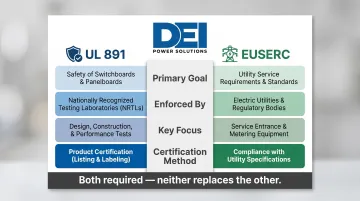
UL 891 is the standard for dead-front switchboards, ensuring product safety. Annex G of UL 891 ("Utility Service Entrance Equipment") aligns UL safety requirements with EUSERC dimensional requirements for switchboard service entrance sections.
A switchboard can be UL Listed (safe to operate) but fail EUSERC compliance if the utility cannot install its meter or access the CT compartment. In such cases, the utility will refuse to energize — even though the equipment passed building inspection.
Both apply without exception:
- UL 891 listing is required by law/NEC
- EUSERC compliance is required by utility contract/tariff
Sourcing EUSERC-Compliant Equipment for Your Project
What to Look For When Specifying Equipment
Before procurement:
- Contact the serving utility early in the design phase to confirm their specific requirements
- Review the utility's current acceptability page to verify which EUSERC drawings are accepted, rejected, or modified
- Verify that the manufacturer has configuration documentation for the relevant utility
- Confirm that equipment submittals include the appropriate EUSERC drawing references
Switchboard Configuration for Utility Metering
Switchboards used in utility metering applications — such as UL 891-certified low-voltage switchboards — need precise configuration to satisfy both the EUSERC framework and individual utility standards:
Required elements:
- Correct CT compartment layout (bar-type or window-type CT provisions)
- Meter socket specifications (jaw count, ring-type configuration)
- Sealing provisions (door hardware, test-bypass covers)
- Proper clearances and conductor entry points
- Fault rating compliance
Meeting these requirements from the start reduces approval delays and avoids costly reconfiguration after fabrication. DEI Power manufactures UL 891-certified switchboards built to approved utility specifications, including EUSERC-compliant meter main configurations. Their 50,000 sq. ft. facility in Ontario, California produces custom-configured switchgear, and the in-house engineering team handles specification review, submittal preparation, and compliance documentation to support utility approval processes.
Always Confirm Requirements with Your Utility
The universal guidance across all utility handbooks:
Never assume EUSERC compliance guarantees acceptance. Requirements can vary by utility and are periodically updated. Rocky Mountain Power states: "All non-residential customers are responsible for coordinating service requirements with the Power Company prior to material purchase and installation."
Timeline considerations:
- Budget time for per-utility drawing review cycles
- Some utilities require multiple approval stages before energization
- Outdated acceptability pages may not reflect current requirements
- Equipment ordered without utility approval risks rejection at final inspection
Contact the serving utility before finalizing equipment specifications and obtain written approval before fabrication begins.
Frequently Asked Questions
What does EUSERC stand for?
EUSERC stands for the Electric Utility Service Equipment Requirements Committee. It is a non-profit standards organization made up of over 80 electric utilities from 14 Western U.S. states that sets technical requirements for utility service equipment, including meter sockets, CT compartments, and metering enclosures.
What does EUSERC compliant mean?
EUSERC compliant means equipment or an installation meets the published technical requirements of EUSERC and the specific serving utility's requirements for utility service equipment. Compliance confirms that equipment meets the dimensional, mechanical, and electrical specifications required for utility approval and energization.
Is EUSERC approved?
"EUSERC approved" typically means a utility has reviewed and accepted equipment or drawings as meeting EUSERC standards for that project. It is not a formal third-party certification from EUSERC itself, but rather an approval based on the serving utility's engineering review.
What are EUSERC drawings?
EUSERC drawings are technical submittal documents showing that service equipment is configured to meet EUSERC requirements. These numbered drawings (e.g., Drawing 301, Drawing 318) specify dimensions, configurations, and electrical details — and utilities typically require them as part of the interconnection approval process before permitting installation.
What is an electric distribution company?
An electric distribution company is a utility that delivers electricity from transmission infrastructure to end-use customers — homes, businesses, and industrial facilities. These member organizations form EUSERC and collectively define service equipment requirements to ensure consistent, safe interconnection across their territories.